 +86 18902444860
 myd@merryoung.com





 English
 Chinese
 Spanish
 French
 Russian
 Italian
 German
 Japanese

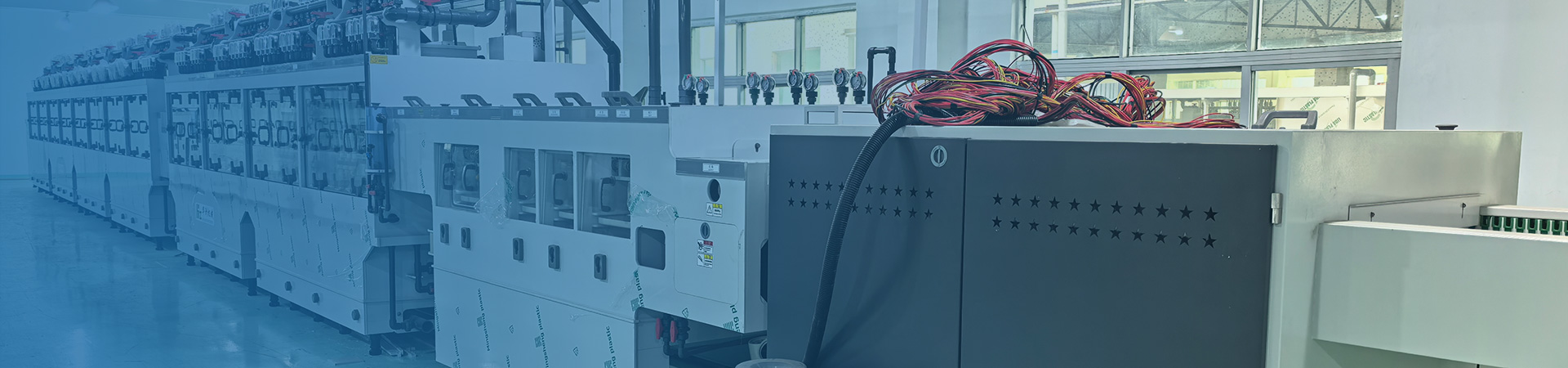
Core Consumables in OLED Evaporation Process
FMM (High-Precision Metal Mask) is a key consumable in the evaporation process of small and medium-sized OLED panels, directly determining the screen resolution and production yield. Its core material is Super Invar alloy, which has long been monopolized by Japanese and Korean companies. Currently, domestic companies have achieved technological breakthroughs and begun mass production. In October 2025, Zhongling Technology completed the installation of the first G8.6 generation FMM exposure machine in China on its production line, achieving a breakthrough in the localization of high-generation product manufacturing equipment.
Domestic FMM companies continue to promote capacity upgrades. Huangshi Quanyang Optoelectronics Technology Co., Ltd. became the first domestic company to achieve mass production of 6th generation metal masks. Huancaixing Technology completed trial mass production of FMMs for 8.6 generation OLEDs, and Zhongling Technology became the first domestic FMM supplier to deliver mass-produced FMMs to G6 panel manufacturers. Nanjing Gaoguang achieved the first G8.6 generation CMM+FMM product combination to roll off the production line in August 2025, with a product aperture accuracy within ±2.5μm. Luwei Optoelectronics launched an expansion plan in 2025 to improve the localization level of high-precision photomasks, and in January 2026, it planned to raise no more than 1.38 billion yuan through a private placement to fund the construction of the first phase of the Xiamen high-generation high-precision photomask production base project. Zhongling Technology completed a C-round financing of over 400 million yuan, with the funds to be used for G8.6 generation capacity expansion and overseas market expansion.
Japan Display Inc. (JDI) developed the "eLeap" technology, attempting to circumvent FMM limitations, but it has not been widely adopted. The global OLED panel market is divided into two major technology camps around 8.6-generation lines: traditional FMM and FMM-free. Samsung Display and BOE, using the FMM route, plan to achieve mass production in 2026.
Chinese Name:High-precision metal mask
Application Areas:OLED panel manufacturing
Material Type:Metal or metal + resin
Major Manufacturers:DNP, Zhongling Technology, Huancaixing Technology
Domestic Breakthroughs: Zhongling Technology, Huancaixing
Market Demand:Estimated at 12.82 billion RMB by 2030
Technical Challenges:Material deformation control
Fine metal masks (FMMs) are core consumable components in OLED evaporation processes, and their manufacturing technology has extremely high barriers to entry. Early on, the global FMM market was monopolized by Japanese companies, with DNP (Dai Nippon Printing) being the absolute leader, once holding over 90% of the global market share. DNP has not only signed exclusive supply agreements with panel manufacturers such as Samsung Display, but also exclusively obtained high-end Invar materials from Hitachi Metals of Japan, forming a complete industrial chain barrier from raw materials to finished products. Korean and Chinese panel manufacturers have long relied on imports, incurring high procurement costs and being subject to external control.
To break the foreign monopoly and ensure the security of the domestic OLED industrial chain, many Chinese companies began R&D and industrialization of FMM (Film Mask) around 2019. For example, Shenzhen Junyi Technology officially launched the R&D of sixth-generation OLED high-precision metal mask in 2019. In 2021, Junying Optoelectronics (related to Junyi Technology) announced the achievement of FMM mass production, marking a breakthrough for domestically produced FMM from scratch.
From 2023 to 2024, China's domestic FMM (Flat Metal Module) industry entered a period of rapid development. Domestic companies such as Huancaixing Technology and Zhongling Technology successively achieved large-scale mass production of G6 generation FMMs and successfully introduced them into domestic panel manufacturing lines, beginning to break the foreign monopoly. Huancaixing Technology, in particular, achieved FMM mass production and introduced it into the production line of Hehui Optoelectronics in 2023.
With global panel giants such as BOE and Samsung Display starting to build G8.6 generation AMOLED production lines, market demand for large-size, high-precision FMMs surged, driving a new round of technological competition. To meet market demand, Japan's DNP announced the launch of its G8 generation FMM production line in Fukuoka in the first half of 2024. South Korean companies such as Poongwon Precision are also accelerating their G8 generation FMM mass production plans. Chinese companies have achieved a series of key breakthroughs in the R&D and mass production of G8.6 generation FMMs. In 2025, Zhongling Technology and Shanxi Taigang Precision Strip jointly developed Invar metal strip for wide-width FMMs, achieving mass production and breaking through the bottleneck of domestic production of key upstream raw materials. In November of the same year, Huancaixing Technology completed the relocation of the first complete G8.6 generation FMM manufacturing line in China, realizing a "generational leap" from G6 to G8 generation. Nanjing Gaoguang also launched G8.6 generation high-precision metal mask products in 2025.
Entering 2026, the industrialization process of high-generation FMMs continues to advance, with Huancaixing Technology's G8.6 generation FMM production line expected to achieve mass production in 2026. Downstream panel production lines, BOE's G8.6 AMOLED production line successfully lit up its first product in December 2025, and Samsung Display also started mass production of its G8.6 AMOLED panels in January 2026, directly driving a definite demand for G8.6 generation FMMs. Domestic companies such as Huancaixing and Zhongling Technology are striving to occupy a more important position in future global market competition through continuous capacity expansion and technological iteration.
Technical Principle: FMM is the core precision mold in the OLED evaporation process. Its role is to help OLED organic materials deposit through tens of thousands of 20μm to 30μm fine pores to form display pixels. The structural fineness of the FMM directly determines the pixel density (PPI) of the AMOLED panel.
The core raw material for FMMs is Invar alloy (usually Invar 36), which has an extremely low coefficient of thermal expansion. Its thickness is typically 20-30 micrometers, and sometimes even as thin as 18 micrometers.
The main manufacturing processes for FMMs include etching, electroforming, and multi-material composite methods. Etching primarily involves etching Invar sheets; representative manufacturers include DNP and TOPPAN of Japan. Electroforming produces even thinner FMMs; representative manufacturers include Athene and Hitachi Maxell of Japan. Multi-material composite methods mainly use a mixture of resin and metal materials to cope with thermal expansion.
From the perspective of aperture shape, FMMs can be divided into slot-type and slit-type. An FMM mainly consists of five parts: frame, cover, support, align stick, and fine stick; the manufacturing process is called mesh fabrication.
FMM manufacturing faces extremely high technical barriers. Aperture precision must be controlled within the micrometer level, such as ±2.5μm. Larger sizes present challenges due to deformation (creep) caused by gravity and thermal stress. Strict requirements are placed on the purity and uniformity of raw materials. FMM technology for silicon-based OLEDs (OLEDoS) has even higher requirements, requiring electroforming and other methods to fabricate on silicon substrates to achieve pixel densities of thousands of PPI.
Future Trends
As panel generation lines evolve towards G8.6 and above, FMM sizes increase, and problems such as creep, bending, and sagging caused by gravity, pressure, and magnetic stress during manufacturing and use become more pronounced. Deformation control becomes a major challenge for mass production. Simultaneously, the requirements for aperture precision, material uniformity, and shape stability under high-temperature environments continue to increase.
The high-end Invar alloy (especially below 50μm) has long been monopolized by Hitachi Metals, which exclusively supplies it to DNP, posing a key bottleneck to the development of China's FMM industry. Although domestic companies such as Zhongling Technology, in collaboration with Taiyuan Iron & Steel Group, have achieved mass production breakthroughs in domestically produced Invar materials (400mm width, 25μm thickness), they still lag behind advanced international levels in terms of comprehensive specification coverage (e.g., 15μm level) and stable mass production.
In 2022, Japan's JDI developed "eLeap" technology, employing maskless deposition and lithography to manufacture OLEDs without FMM, increasing pixel density to 800ppi. If this technology becomes widespread, it is expected to solve the pain points of high cost, long lead times, and high minimum order requirements of FMM, potentially reducing FMM demand. Furthermore, printed OLED technology also bypasses evaporation equipment and FMM, offering advantages such as high material utilization and low cost, making it another important alternative technology.
FMM products will evolve towards thinner (e.g., 15μm), finer (higher PPI, e.g., >550ppi), and wider and longer (suitable for large-size panels such as G8.6). For example, Huancaixing Technology has showcased the world's longest G8.6 generation FMM sample, measuring 1.7 meters and widest at 480mm. With major panel manufacturers such as Samsung Display and BOE investing in G8.6 generation AMOLED production lines, the demand for FMM will continue to grow, with the global market size expected to reach 12.82 billion yuan by 2030. The market competition landscape is shifting from a monopoly by Japan's DNP to a diversified landscape with the rise of Chinese (e.g., Huancaixing, Zhongling Technology) and South Korean (e.g., Poongwon Precision) companies. China's FMM industry is moving from "domestic production breakthroughs" to "improving yield, expanding capacity, and entering the global market." Domestic companies such as Huancaixing and Zhongling Technology have already achieved trial production or complete line relocation of G8.6 generation FMMs and are actively planning new capacity to meet the demand of downstream high-generation production lines.
The above article references resources from Baidu Baike:FMM_百度百科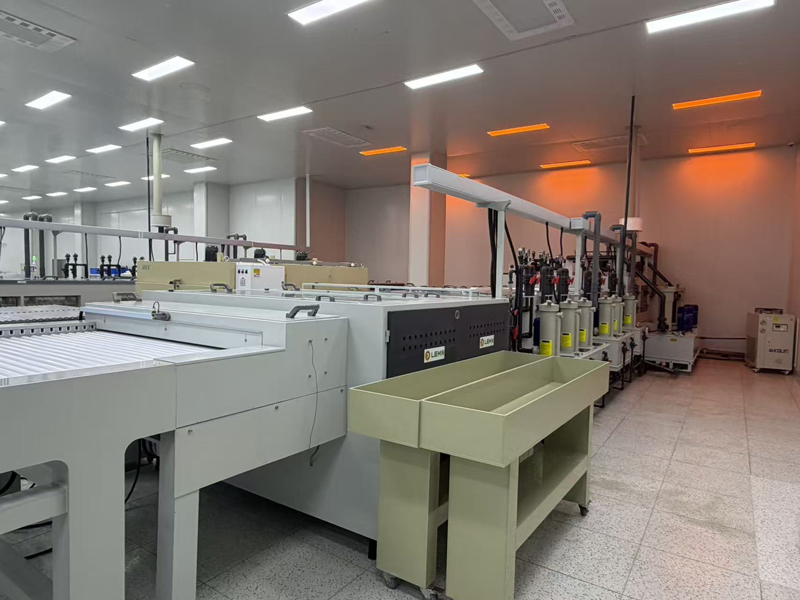
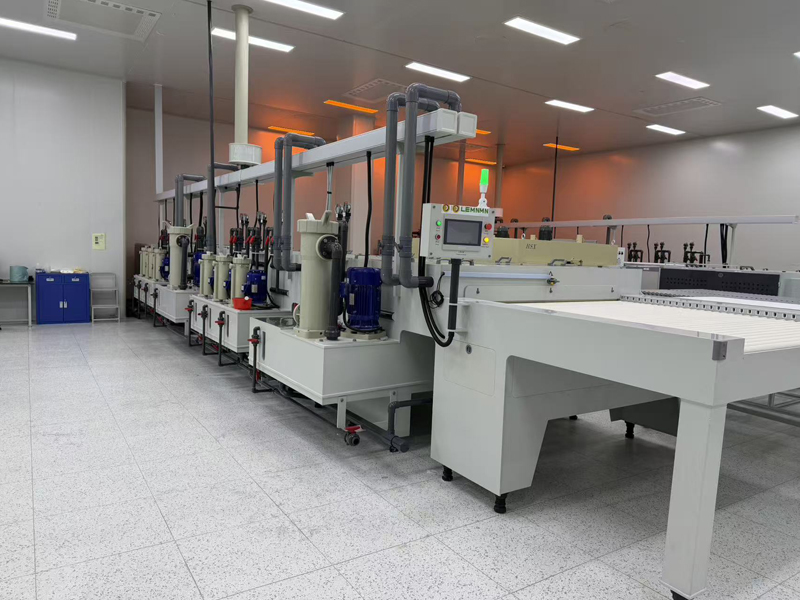
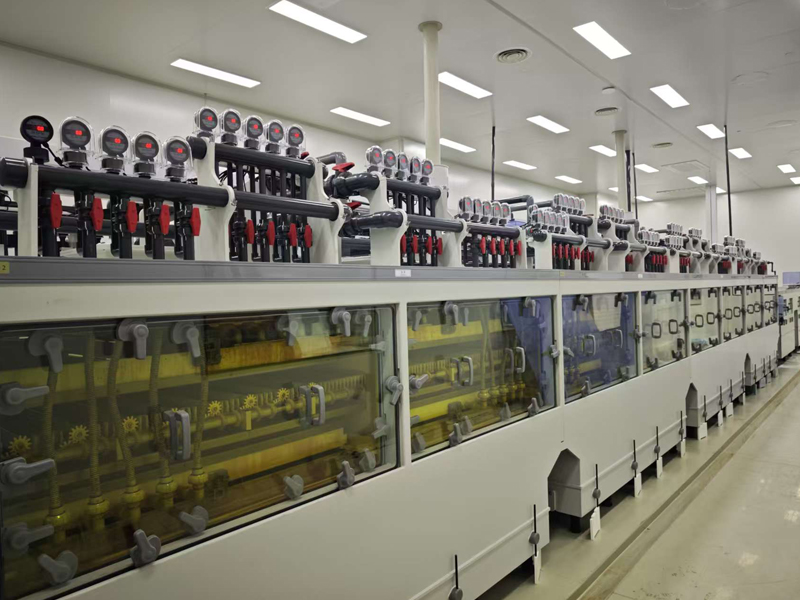
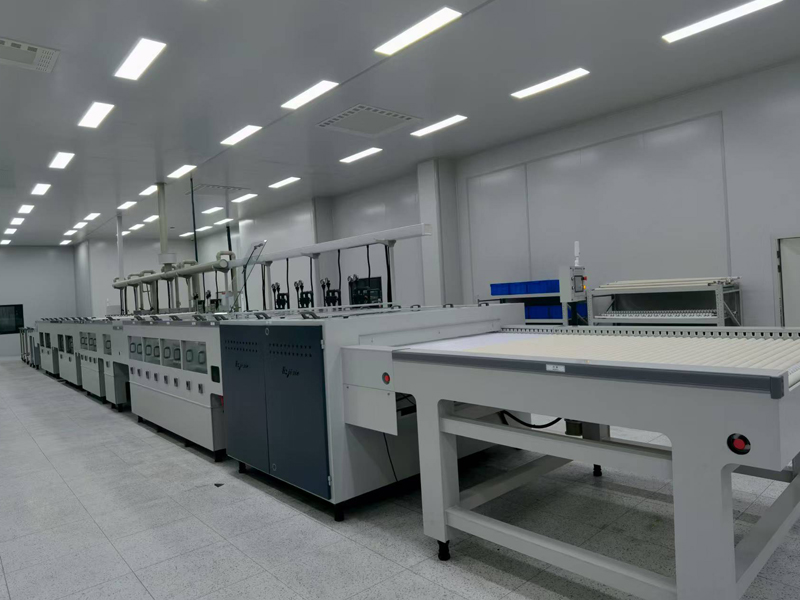
Huazhou Machinery will continue to focus on the field of FMM precision etching equipment, closely monitor industry technology development trends, and continuously improve the precision and stability of its equipment. We are committed to providing FMM companies with strong process equipment support, jointly promoting the advancement of OLED core material production technology.
If you have any questions about our G8.6 generation FMM precision etching equipment or need cooperation, please feel free to contact us
Latest Etching Knowledge
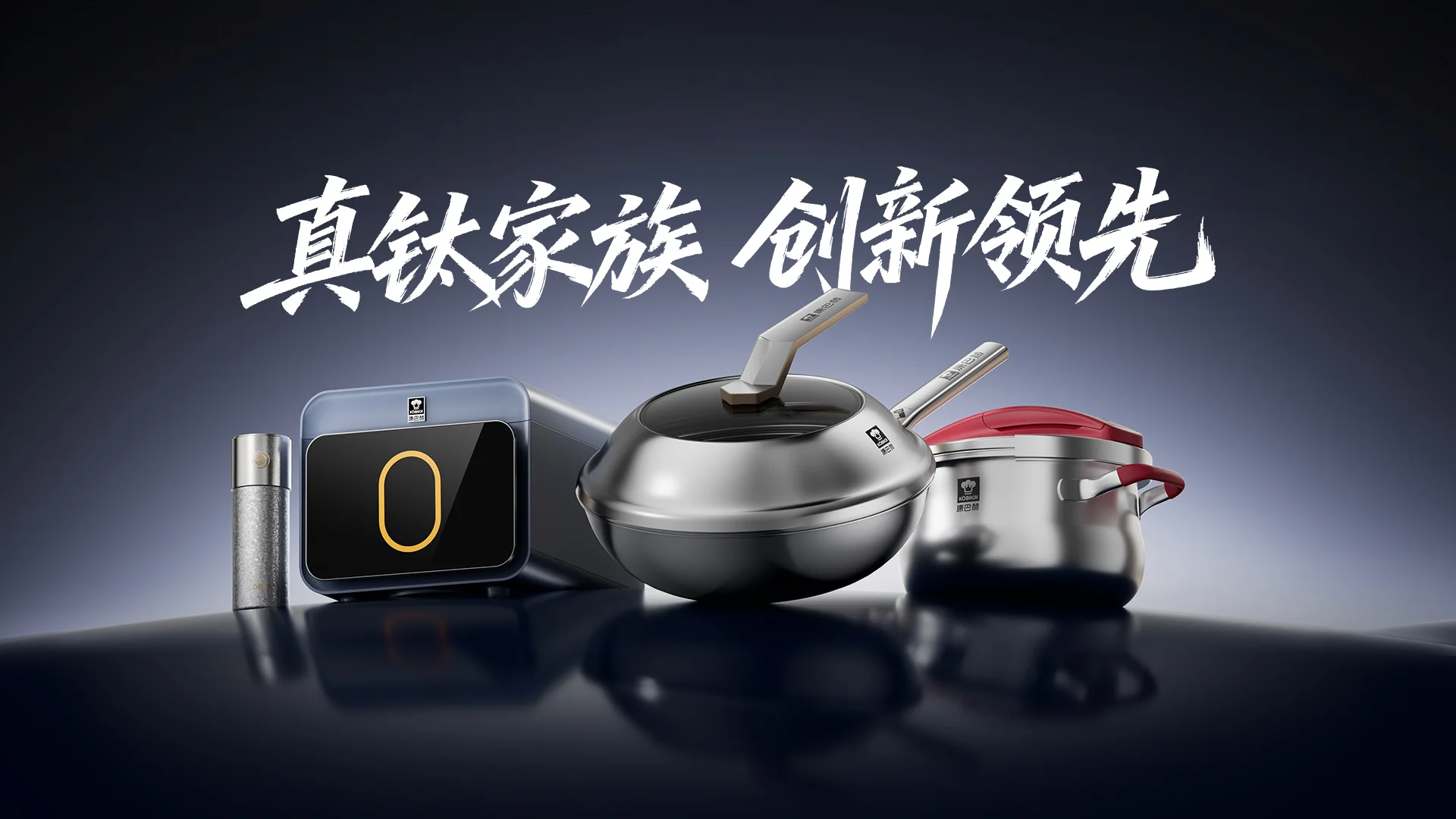
With the continuous upgrade of consumer lifestyles, modern households are demanding more from cookware products. Requirements have expanded beyond basic durability to include health, non-stick perform……

With the continuous upgrade of automotive consumption, customers are placing increasingly higher demands on vehicle interior design, quality, and craftsmanship.Automotive decorative trims — whether ap……

In the era of smart vehicles, in-car audio experience has become an important factor in evaluating vehicle luxury, comfort, and overall quality. As a critical acoustic component of automotive sound sy……
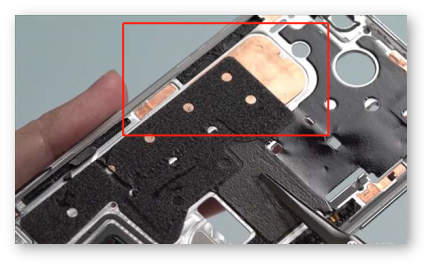
With the rapid advancement of 5G communications, smart devices, new energy vehicles, and high-performance computing platforms, the power consumption and heat generation of electronic equipment continu……
Send Inquiry
Choose Huazhou Machinery to safeguard your reputation.
Quick Navigation
Company
Contact Us
 No.1 Niuling Road, memorial archway, Sukeng, Changping Town, Dongguan
 +86 18902444860
 myd@merryoung.com






Copyright © Dongguan Huazhou Machinery Technology Co., Ltd.